
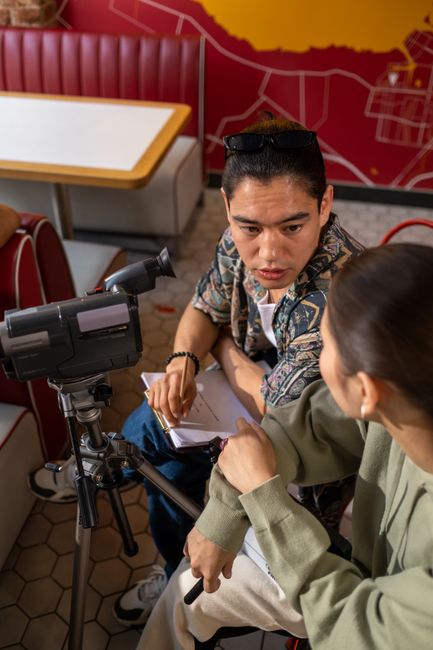
The first mini drama should be a 12-episode animated anthology about the small choices that shape a relationship: attention, trust, repair, boundaries, reciprocity and letting go. Inspired Relationships would distribute it as original entertainment, while each story would draw from broad human principles rather than protected characters, plots or dialogue.
At 11:40 p.m. in a small animation studio near Lisbon, fictional producer Mina watches an unfinished episode with the sound off. On screen, a tired baker places two cups of tea on a windowsill. Her partner reaches for one, hesitates, then leaves the room.
The scene is only 40 seconds long, yet the production has reached its decision point. If the next shot explains too much, the story becomes a lecture. If it explains too little, the audience has no reason to return. Twelve commissioned episodes, localization work and the identity of a new entertainment channel could all be shaped by this one choice.
Mina removes the planned voice-over. The baker turns the second cup upside down instead. That image gives the episode its ending and the next episode its question.
This is the mini drama we would build first.
A 12-episode season built around relationship turning points
The pilot season would contain 12 original animated episodes, each focused on one relationship principle expressed through a concrete decision. Episodes could stand alone while sharing a visual setting, recurring objects or background characters. That structure rewards regular viewers without making episode nine incomprehensible to someone arriving for the first time.
The season might run like this:
- Two partners stop finishing each other’s sentences and discover they were answering different questions.
- A friend keeps a borrowed key after the friendship has changed.
- A couple argues over an empty chair that represents a promise neither has named.
- Two siblings divide their late mother’s plants and disagree about the only one still flowering.
- A musician mistakes constant availability for care.
- A young parent realizes an apology without changed behavior has become another routine.
- Two neighbors exchange meals but never admit what each exchange means.
- A long-distance couple edits the truth to protect one another, then meets the cost.
- A former partner returns a box containing one object that belongs to neither person.
- A new relationship confronts a boundary that feels like rejection to one person and safety to the other.
- Two friends choose between being right in public and honest in private.
- The season returns to the two cups of tea, now seen from the person who left the room.
These are premises, not adaptations. Abstract ideas such as trust, jealousy, grief and repair belong to human experience. Specific fictional expression requires protection. Scripts would therefore need documented origin, similarity review and a record of source materials used during development. References could guide tone, pacing or audience expectations, but no protected plot, character, visual design, dialogue or signature scene should be reproduced.
The anthology format also creates a practical creative boundary. Each episode needs its own setting, conflict, turn and landing. That forces the team to write stories instead of disguising advice as drama.
Production should advance in small, reviewable increments
Mina’s tea-cup episode would not trigger production of the remaining eleven. It would unlock the next decision gate.
The first increment would include a series bible, visual rules, character boundaries, three short premises and one complete animatic. Human reviewers would assess emotional clarity, originality, cultural assumptions, age suitability and whether the episode works without explanatory narration. A rights review would examine the script, imagery, music, voices and production inputs before public release.
If the animatic passes, production could move to a three-episode batch. That batch is large enough to test variation and small enough to revise without discarding a season. Episodes four through six would proceed only after the team reviews completion rate, replays, comments, moderation load and qualitative reactions to the first releases.
Localization would follow the same gated pattern. Translate one approved episode into a small set of priority languages, then review timing, idiom, text expansion, subtitles and cultural meaning with people who understand each market. A literal translation of “give someone space,” for example, may preserve the words while losing the emotional point.
The release rhythm should leave room to learn. One episode per week provides a clear editorial beat and time for trailers, stills, character notes and moderated discussion between releases. A faster rhythm could be tested later if production quality and review capacity hold.
Marketing Agent can support the business workflow around such a project: define the audience and positioning, scan evidence-linked topics, maintain the editorial calendar, create supporting posts and videos, localize approved material and publish to connected channels where provider access permits. Approval rules, product scope and audit trails can keep unattended work within agreed boundaries.
The animated anthology itself remains a separate entertainment product. This article series is a business exploration of how such a product could be designed, produced and distributed. Marketing automation does not replace writers, directors, animators, rights reviewers or cultural judgment.
Inspired Wealth and Inspired Motivation come next
Relationships make the strongest first category because a glance, pause or misplaced object can carry the conflict. Animation can show emotional tension without requiring a narrator to explain a framework. The audience also understands the stakes immediately: someone may leave, trust may break, or a repair attempt may arrive too late.
Inspired Wealth would follow after the production system proves it can handle original scripts, review gates and localization. Its stories could explore delayed gratification, status, generosity, financial secrecy and the distance between having enough and feeling secure. Those themes need careful handling because money claims can slide into advice, promises or misleading certainty. The first season should establish editorial discipline before entering that territory.
Inspired Motivation would come third. Its strongest stories would examine persistence, identity, avoidance and the cost of pursuing a goal that no longer fits. This category carries its own creative trap: speeches can replace drama. A mature production process would help keep motivation grounded in choices and consequences.
Jambolino should retain gentle adventure. Its appeal can come from curiosity, mild peril, discovery and companionship. Sensational romance conventions would distort that promise and create an audience mismatch. Separate series identities also make moderation, age expectations, visual rules and distribution decisions easier to govern.
The same market discipline applies to geographic expansion. Translation alone does not create local trust. The operating lessons in Chinese Content That Feels Native are relevant here: local editorial review, platform fit and cultural signals belong inside production, not at the end.
The first 90 days end with evidence, not a season order
During days 1 through 30, the team would define audience boundaries, the anthology promise, rights controls, visual language and rejection criteria. It would write three premises, select one and produce a script, storyboard and rough animatic. The gate at day 30 is simple: does one original episode create genuine emotional tension without borrowed expression or explanatory copy?
Days 31 through 60 would produce the first three finished episodes, complete music and voice rights checks, prepare captions and test limited localization. The team would also build the Inspired Relationships release calendar, supporting social assets and moderation rules. No remaining episode should enter full production until reviewers see the complete viewing experience.
Days 61 through 90 would release those episodes on a measured rhythm, collect supported audience and site signals, review comments, document production costs and decide among three paths: stop, revise the format, or commission the next three episodes. A decision to continue should depend on repeatable production quality and meaningful audience response, not the team’s attachment to the concept.
Mina’s final review happens on the morning after episode three appears. She opens the project board beside a cold cup of tea. Three columns wait: continue, revise, close. For the first time, the next move depends on observed behavior rather than enthusiasm.
If the format earns another increment, the remaining anthology can grow. A future video edition of this business series could also show the planning, rights and production gates behind it, using approved screen captures and original visuals. The next step remains deliberately smaller: finish one scene that makes a stranger care what happens after the second cup is turned upside down.
Comments
No comments yet.